
How Alcohol Affects Your Teeth, Gums, and Overall Oral Health

Updated: Jun 10
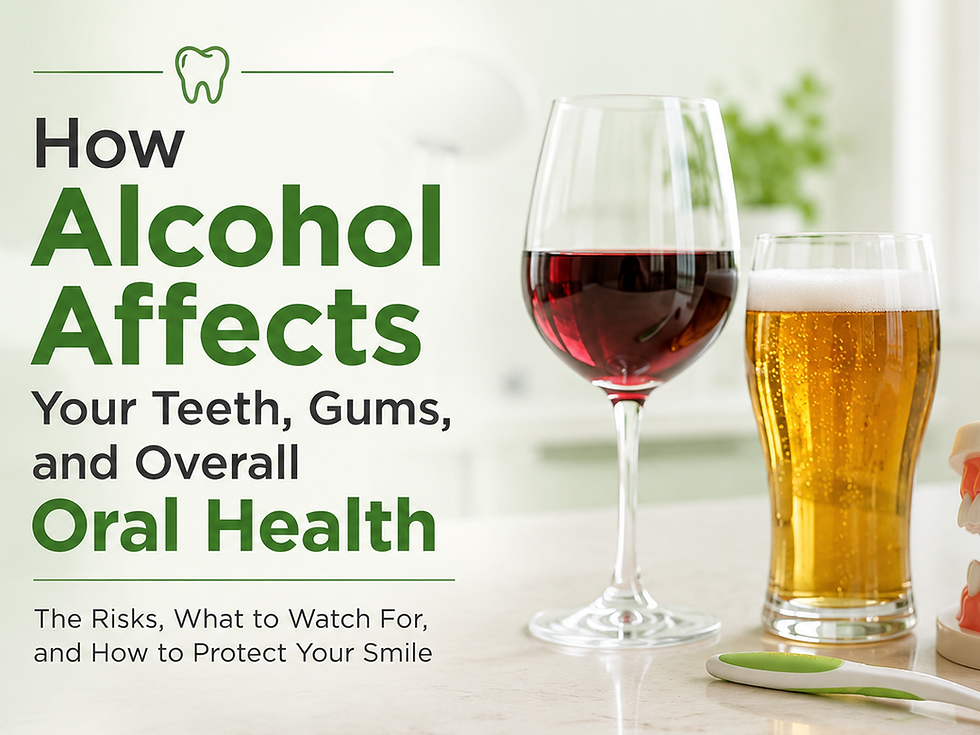
That Friday night glass of wine or weekend beer probably feels harmless. But your teeth and gums tell a different story. Alcohol does more to your mouth than leave a bad taste. It strips away enamel, dries out soft tissues, feeds the bacteria behind cavities, and over time, it can raise your risk of oral cancer.
At Appin Dental Surgery in the heart of Wollondilly, we see the effects of regular drinking on our patients' teeth more often than you think. The good news? You don't have to quit drinking entirely. A few smart habits and regular dental check-ups go a long way. Here's what you need to know.
How Does Alcohol Damage Your Teeth?
Alcohol attacks your teeth in three ways at once: acid, sugar, and dehydration.
Most alcoholic drinks sit in the acidic range on the pH scale. Wine, cocktails, and pre-mixed drinks typically fall between a pH of 2.5 and 4.0, which is low enough to soften and erode tooth enamel over time. Once enamel wears down, it doesn't grow back. That means more sensitivity, more discolouration, and a higher chance of cavities.
Then there's the sugar. Cocktails, alcopops, and sweet wines are loaded with it. Oral bacteria feed on sugar and produce acid as a byproduct. So you are getting a double hit: the acid already in the drink, plus the acid your own bacteria create after metabolising the sugar. This is how alcohol tooth decay starts, often without any obvious symptoms until the damage is done.
On top of that, alcohol is a diuretic. It pulls water from your body and reduces saliva flow. Saliva is your mouth's natural defence system. It washes away food particles, neutralises acids, and remineralises enamel. Without enough of it, you develop a condition called xerostomia (dry mouth), and your risk of cavities and gum disease goes up significantly.
Alcohol and Gum Disease: A Connection Most People Miss
Here is something that doesn't get talked about enough: alcohol and oral health gum disease are closely linked.
Regular alcohol consumption weakens your immune system. Your body becomes less effective at fighting off the bacterial infections that cause gingivitis and periodontitis. Studies show that heavy drinkers experience more severe forms of periodontal disease compared to moderate or non-drinkers.
Alcohol also irritates the soft tissues in your mouth directly. The gums become inflamed, bleed more easily, and start to pull away from the teeth. When that happens, deep pockets form where bacteria thrive. Left untreated, this progresses to bone loss around the teeth, and eventually, tooth loss.
If your gums are sore, swollen, or bleed when you brush, and you drink regularly, it's worth mentioning that to your dentist. At Appin Dental Surgery, we check for early signs of gum disease at every routine dental visit. Catching it early makes treatment simpler and more effective.
Why Do My Teeth Hurt After Drinking Alcohol?
This is one of the most common questions we hear. If your teeth feel sensitive after drinking alcohol, you are not imagining it.
There are a few reasons this happens. First, the acid in alcoholic drinks temporarily softens enamel. With thinner or already-compromised enamel, the underlying dentin gets exposed. Dentin contains tiny nerve endings, so when cold, hot, or acidic liquids touch it, you feel a sharp sting.
Second, if you already have small cavities or cracks you don't know about, alcohol can seep into those openings and irritate the nerve inside the tooth. In some cases, the damage may require a root canal treatment to save the tooth. Third, alcohol-induced dry mouth means there's less saliva buffering your teeth. All of these factors combine to create that uncomfortable sensitivity.
If you're noticing sensitive teeth after drinking alcohol on a regular basis, don't ignore it. It could be a sign of enamel erosion, an untreated cavity, or early gum recession. Book a check-up with us and we'll get to the root cause.
Which Drinks Are Worst for Your Teeth?
Not all alcoholic drinks are equally damaging. Here is a quick breakdown:
Drink | Acidity | Sugar | Staining (tannins/dyes) | Overall Risk |
Red wine | High | Moderate | High (tannins + chromogens) | High |
White wine | Very high | Low–moderate | Low | Moderate–high |
Beer (lager) | Moderate | Low | Low | Low–moderate |
Cocktails / mixers | Varies | Very high | Varies (dyes) | High |
Spirits (neat) | Low | Low | Minimal | Low |
Alcopops / RTDs | High | Very high | Moderate (dyes) | Very high |
Alcohol and Oral Cancer: What Research Shows?
This is the serious part, and it's worth understanding clearly.
The International Agency for Research on Cancer (IARC) classified alcohol as a Group 1 carcinogen back in 1987. When you drink, the ethanol in your beverage is converted into a compound called acetaldehyde. This substance is genotoxic, meaning it can damage your DNA, particularly in the tissues of your mouth, throat, and oesophagus.
Heavy drinkers face the highest risk. But even moderate, long-term consumption increases your chances of developing oral cancers, including squamous cell carcinoma. When alcohol use is combined with smoking, the risk multiplies, because ethanol makes the cell membranes in your mouth more permeable, which allows tobacco carcinogens to penetrate more deeply.
At Appin Dental Surgery, Dr Shelly performs oral cancer screenings as part of your routine dental examination. Early detection saves lives. If you notice any persistent sores, white or red patches, or unusual lumps in your mouth, don't wait. Call us on (02) 9068 1369.
Alcohol-Based Mouthwash: What to Watch For
Many popular mouthwashes contain alcohol (sometimes up to 26% ethanol). While they kill bacteria in the short term, they also dry out your mouth and can disrupt your oral microbiome over time. If you are already dealing with dry mouth from drinking, adding an alcohol-based mouthwash to your routine only compounds the problem.
Look for alcohol-free mouthwash options instead. They're just as effective at reducing bacteria without the drying side effects of alcohol on teeth. Ask our team for a recommendation at your next general dentistry appointment.
7 Ways to Protect Your Teeth If You Drink Alcohol
You don't need to give up drinking completely. But these habits make a real difference:
Alternate every alcoholic drink with a glass of water. This rinses acids and sugars away and keeps saliva flowing.
Wait at least 30 minutes before brushing your teeth after drinking. Acid softens enamel temporarily, and brushing too soon can actually scrub it away.
Choose drinks with lower sugar and acidity. Spirits with soda water or dry wines are better choices than cocktails or alcopops.
Use a straw for cocktails and mixed drinks to reduce contact with your teeth.
Brush twice daily with fluoride toothpaste and floss every day. This removes plaque and strengthens enamel against acid attacks.
Switch to an alcohol-free mouthwash to avoid additional drying effects.
Keep up with your regular dental check-ups. At Appin Dental Surgery, we catch early signs of enamel wear, gum disease, and oral cancer before they become bigger problems.
FAQs
Q: Is alcohol bad for your teeth?
Yes, regular alcohol consumption can damage your teeth. The acid erodes enamel, the sugar feeds cavity-causing bacteria, and the dehydrating effect reduces saliva production. Over time, this combination leads to tooth decay, sensitivity, and gum disease.
Q: Why do my teeth hurt after drinking alcohol?
Tooth pain after drinking usually means acid has softened your enamel, exposing sensitive dentin underneath. It can also indicate hidden cavities, cracks, or gum recession. If it keeps happening, book a check-up at Appin Dental Surgery so we can find and treat the cause.
Q: Is beer bad for your teeth?
Beer is less acidic and lower in sugar than wine or cocktails, so it's not the worst option. However, dark beers can still stain teeth, and any regular alcohol consumption reduces saliva flow. Moderation and good oral hygiene are key.
Q: Can I use mouthwash after drinking alcohol?
You can rinse your mouth, but choose an alcohol-free mouthwash. Alcohol-based mouthwashes will dry out your mouth further, increasing your risk of cavities and bad breath. An alcohol-free rinse helps wash away residue without the drying effect.
Q: How often should I see a dentist if I drink regularly?
We recommend check-ups every six months. If you drink regularly, these visits are especially important because your dentist can spot enamel erosion, early gum disease, and oral cancer signs before they progress. At Appin Dental Surgery, serving Appin, Wollondilly, and surrounding areas including Wilton, Campbelltown, and Camden, we make these visits quick and comfortable.
Protect Your Smile With Appin Dental Surgery
Your dentist is one of the first people who'll notice the effects of alcohol on your teeth and gums. Whether it's early enamel wear, bleeding gums, or something more serious, catching it early makes all the difference.
At Appin Dental Surgery on Appin Road, we're proud to be the trusted dental practice for families across Wollondilly, Wilton, Picton, Campbelltown, and Camden. We're QIP accredited, AHPRA registered, and we accept all major health funds with HICAPS on-the-spot claims. Dr Shelly and our team are here to help you keep your smile healthy without judgment.

Comments