
Wisdom Teeth Removal in Appin
Gentle surgical care, full sedation options, and a clinic that's treated Wollondilly smiles for three decades
Painful wisdom tooth? Swollen gum at the back of your mouth? If you've been searching for dental wisdom teeth removal near me from Appin or anywhere in Wollondilly, you're in the right place. Wisdom teeth removal is one of the most common procedures we perform for local patients, and most of the anxiety people bring to the chair evaporates within the first five minutes.
At Appin Dental Surgery, our dentist wisdom teeth removal approach treats every case as a small surgery, not a rushed extraction. That means digital diagnostics before the chair, a tailored anaesthetic plan, controlled sectioning to protect your jawbone, and aftercare that's written for you to follow at home. For patients who need IV sedation, we arrange treatment at our affiliated Bradbury Dental Surgery, where our team has delivered sedation dentistry for over 30 years.
If you're ready to stop the pain and protect the teeth around it, we can help.


What Are Wisdom Teeth & Why Do They Cause Problems?
Wisdom teeth (your third molars) are the last adult teeth to come through, usually between the ages of 17 and 25. Your ancestors needed them for chewing coarse food. Modern jaws simply haven't kept up, so these teeth often arrive without enough room to sit properly, which is why dental wisdom teeth removal is such a common procedure today. When that happens, three things tend to go wrong:


Impaction
Impaction means the tooth is physically blocked by bone, gum, or a neighbouring molar, and can't fully emerge. Impacted teeth sit at awkward angles (horizontal, mesial, distal, or vertical) beneath the gumline. A panoramic X-ray (OPG) or a 3D CBCT scan shows us exactly what's going on so we can plan around it.
Infection
Pericoronitis is the inflammation that happens when a flap of gum tissue (the operculum) partly covers an erupting wisdom tooth. Food and bacteria get trapped underneath, and the area becomes recurrently sore, swollen, and sometimes infected enough to cause facial swelling, fever, or difficulty opening the mouth.
Damage to the Neighbouring Tooth
An impacted wisdom tooth often presses against the second molar in front of it. Over time, that constant pressure causes decay (the contact point is impossible to clean), gum pocketing, bone loss, or even resorption of the second molar's root. Losing a healthy second molar because of a wisdom tooth is one of the saddest outcomes we see, and it's preventable.
Cysts and Pathology
In a small minority of cases, the sac around an impacted wisdom tooth develops into a cyst, and rarely into a tumour. These can destroy bone silently. Routine OPG review during your check-ups catches this early.

Understanding Impacted Wisdom Teeth
An impacted wisdom tooth is one that can't fully emerge into its proper position. We classify impactions into three types, because each one changes the surgical approach:
Soft Tissue Impaction: The tooth has broken through the bone but is still partly covered by gum. This is the type most likely to cause pericoronitis, since the gum flap traps debris.
Partial Bony Impaction: Part of the tooth remains locked inside the jawbone. These teeth are extremely difficult to clean and are prone to decay and gum disease on the adjacent second molar.
Full Bony Impaction: The tooth is entirely encased in jawbone and has never broken through to the surface. Even hidden, these can still press on nerves or adjacent teeth and can cause cyst formation over time. Before any surgical plan, we review an OPG radiograph (and, where clinically indicated, a CBCT scan) to map the position of the tooth, its roots, and the surrounding nerves.
When is Wisdom Teeth Extraction Necessary?
Not every wisdom tooth needs to come out. If yours have erupted straight, are easy to clean, and don't bother you, we'll leave them alone and monitor them at your regular check-ups. Dental wisdom teeth removal becomes the right call when one of the following is true:
Recurring pericoronitis: You've had the same painful, swollen flap of gum flare up multiple times.
Damage to the second molar: The tooth in front shows decay, root resorption, or bone loss caused by the impacted wisdom tooth.
Irreparable decay: The wisdom tooth itself is too far gone to save with a filling or crown, usually because cleaning it was never realistic in the first place.
Cystic change or pathology: Your OPG shows a fluid sac or bony lesion around the crown of the tooth.
Orthodontic risk: Your orthodontist has flagged the wisdom tooth as a risk to the result of your Invisalign or braces treatment.
Chronic pain or restricted jaw movement: that hasn't settled with conservative care.
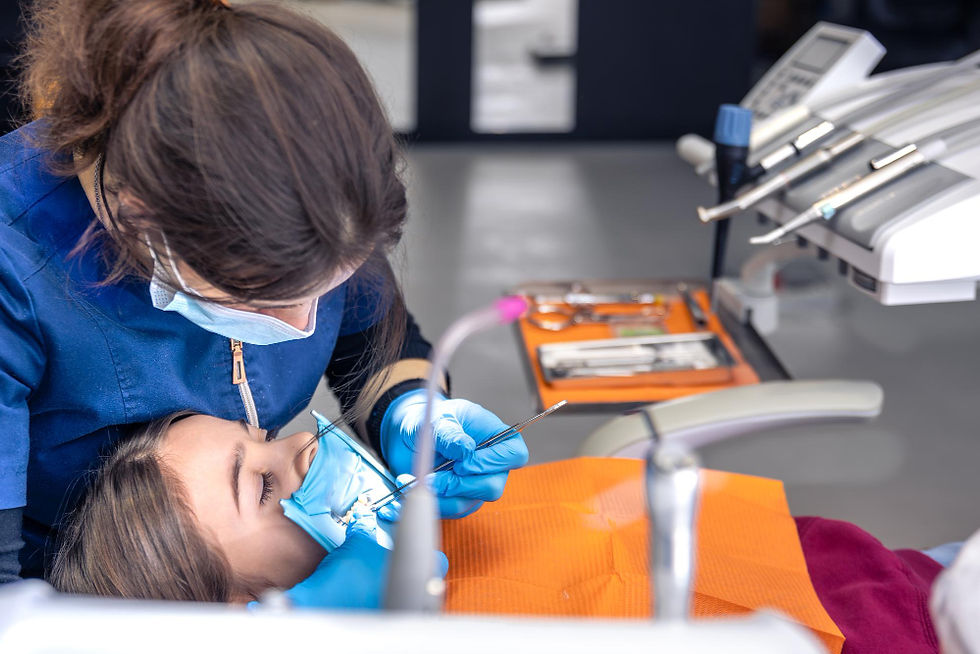
Preparing for Your Wisdom Teeth Removal
Proper preparation is essential for a smooth procedure and an optimal recovery. Our team will provide you with detailed instructions, but here are the key steps to take before your appointment:
Medical and Logistical Preparation
Review Instructions
Read the pre-op and post-op sheet we send you. Call us if anything is unclear before the day.
Discuss Medications
List every medication, vitamin, and supplement you take (including blood thinners and herbal products). Some need to be paused before surgery. Don't stop anything without checking with us first.
Arrangement for Escort
If you're having oral or IV sedation, you'll need a responsible adult to drive you home and stay with you for several hours. You cannot drive, take public transport alone, or use a rideshare by yourself.
Wear Comfortable Clothing
Loose, short-sleeved clothes work best, especially for IV sedation where we need easy arm access.
Day-of-Surgery Guidelines
Fasting (Sedation Only)
For IV sedation, follow the fasting window your team gives you (usually no food or drink for 6 hours prior). This is a safety rule, not a suggestion. If you break it, we'll reschedule.
Oral Hygiene
Brush thoroughly before coming in. A clean mouth lowers infection risk.
Avoid Jewellery and Makeup
Remove jewellery and contact lenses. For IV sedation, skip nail polish too (it interferes with pulse oximetry).
The Wisdom Teeth Removal Process at Appin Dental Surgery
Because impaction is common, wisdom teeth removal is usually a surgical procedure rather than a simple extraction. Here's what happens on the day:

We review your OPG radiograph and CBCT scan (if taken), mapping the tooth position, root curvature, and proximity to the inferior alveolar nerve. Nothing starts until this step is done.
We administer your chosen option (local, oral sedation, or IV sedation for Bradbury Dental cases). We won't pick up an instrument until you confirm the area is completely numb and you feel comfortable.
A small, precise incision exposes the tooth. If bone is covering the crown, a gentle reduction is made to create clear access.
For impacted teeth, we section the crown and roots into smaller pieces. This protects the surrounding jawbone and the nerve underneath. You'll feel firm pressure, never sharp pain.
The socket is thoroughly irrigated. We close the gum with dissolvable sutures so you don't need a separate appointment to have them removed.
Once the anaesthetic effect is stable, we walk you through your printed aftercare sheet, hand over any prescribed medications, and confirm your escort is ready. If you've had IV sedation at Bradbury Dental, our nursing team monitors you until you're ready to leave safely.
Anaesthesia and Comfort Options
Your comfort is non-negotiable. We tailor the anaesthesia plan to the complexity of your extraction and your anxiety level:
Local Anaesthesia
Numbs the surgical area completely. You stay awake, feel pressure but no sharp pain, and can talk to our team throughout.
Oral Sedation
A prescription tablet taken before your appointment. You remain conscious but deeply relaxed, and many patients remember little of the procedure afterwards. You'll need a responsible adult to drive you home.
IV Sedation (at Bradbury Dental Surgery)
Our deepest relaxation option, for patients with significant anxiety or complex impactions. You're in a twilight sleep while qualified staff monitor your vital signs continuously. IV sedation is delivered at our affiliated Bradbury Dental Surgery. You'll need a responsible adult with you.

Planning Your Wisdom Teeth Treatment
If you're researching dental wisdom teeth removal cost, the honest answer is that it varies a lot between patients, because three factors swing it significantly:
-
Degree of impaction. A fully erupted wisdom tooth is a very different job to a horizontal full bony impaction.
-
Anaesthesia chosen. Local anaesthesia, oral sedation, or IV sedation (with associated Bradbury Dental facility fees).
-
Number of teeth treated in one visit. Some patients have one tooth removed; others do all four to shorten total recovery.
We give you a detailed, written quote after your clinical assessment, so you can plan with full information. Every patient's Australian health fund rebate is different, and we process your claim instantly through HICAPS on the day.


Health Funds & Coverage
We're preferred providers for nib and Medibank, and we accept every major Australian health fund. HICAPS on-the-spot claiming means you only pay the gap at the counter.
Program Eligibility
We welcome patients eligible under the Department of Veterans' Affairs (DVA) Dental Services and the Child Dental Benefits Schedule (CDBS). Learn more on our Patient Resources.
Flexible Payment
We offer Afterpay, Humm, and the National Dental Plan for larger treatments. Our team will walk you through options before you commit to anything.
Post-Operative Care: Your Wisdom Teeth Recovery Guide
A smooth recovery hinges on protecting the blood clot that forms in the empty socket. If it gets dislodged, you risk dry socket, which is painful and slows healing.
Critical Care (First 24 Hours)
Protect the Clot
Do not spit. Do not smoke. Do not rinse forcefully. Do not use a straw. Do not drink hot liquids.
Gauze
Bite gently on the gauze for 30 to 60 minutes. Replace if it soaks through and oozing continues.
Swelling
Ice pack on the cheek, 15 minutes on and 15 off, for the first 24 hours. This makes the biggest difference to how you feel on day 2.
Pain Relief
Take any prescribed medication on schedule before the local anaesthetic wears off. It's much easier to stay ahead of the pain than catch up to it.
Ongoing Recovery
Diet
Soft, cool foods and liquids for the first 3 to 4 days. Think yoghurt, smoothies, mashed potato, scrambled eggs, soup once cooled. Chew on the opposite side.
Rinsing
After 24 hours, rinse gently with warm salt water 2 to 3 times daily, especially after eating.
Brushing
Resume gentle brushing, avoiding the surgical sites for the first few days. Your normal routine can come back gradually over the first week.
Why Choose Appin Dental Surgery for Your Wisdom Teeth Removal?
Choosing the right surgical partner is key to a smooth recovery. Patients trust us for this complex care because of our focus on safety, skill, and comfort:
01
Specialised Skill
& Safety
Led by Dr Shelly's extensive surgical experience, we specialise in the precise removal of impacted wisdom teeth. Meticulous pre-operative planning ensures the maximum level of surgical safety and predictable outcomes.
02
Ultimate Comfort & Sedation
Your profound relaxation is our priority. We offer a full spectrum of comfort solutions, including Oral and IV Sedation, specifically tailored to transform your surgical experience into a stress-free event.
03
Local, Comprehensive Care
We provide seamless support from your initial diagnosis through to full recovery and post-operative follow-up. You receive highly specialised care with the personal touch of a trusted local community clinic.
04
Honest Referrals When They're Right
If your case is too complex for our clinic, we'll tell you and refer you to a specialist oral and maxillofacial surgeon. We don't take on cases that should be in a specialist's chair. That's the ethical baseline for YMYL care.
05
Local Wollondilly
Care
If you've been searching for dental wisdom teeth removal near me, we're right on Appin Road, a short drive from Wilton, Picton, Douglas Park, Menangle, Tahmoor, Camden, and Campbelltown. HICAPS on the spot, Medibank and nib preferred provider, and a clinic that feels less like a hospital and more like somewhere you'd actually go for a check-up.
Book Your Wisdom Teeth Extraction in Appin
Do not ignore bleeding gums. Take the crucial step toward arresting the infection and protecting your smile.
Frequently Asked Questions About Tooth Extractions
No. We numb the area completely with local anaesthetic, so you feel pressure but no sharp pain. For anxious patients, oral sedation and IV sedation (at Bradbury Dental) are also available.
Swelling peaks at 48 to 72 hours, then settles quickly. An ice pack (15 minutes on, 15 off) for the first 24 hours makes the biggest difference.
Dry socket is when the protective blood clot gets dislodged, exposing bone and nerves. For 72 hours: no smoking, no straws, no forceful rinsing, no spitting.
Stick to soft, cool foods for 3 to 4 days (yoghurt, smoothies, mashed potato). Reintroduce normal foods gradually, chewing on the opposite side.
Common risks are swelling, bruising, dry socket, and temporary jaw stiffness. Nerve-related numbness is rare but possible with lower wisdom teeth. We review OPG and CBCT scans beforehand to plan around the nerve.
