
Temporary Crown Fell Off? What to Do (and What Not To)

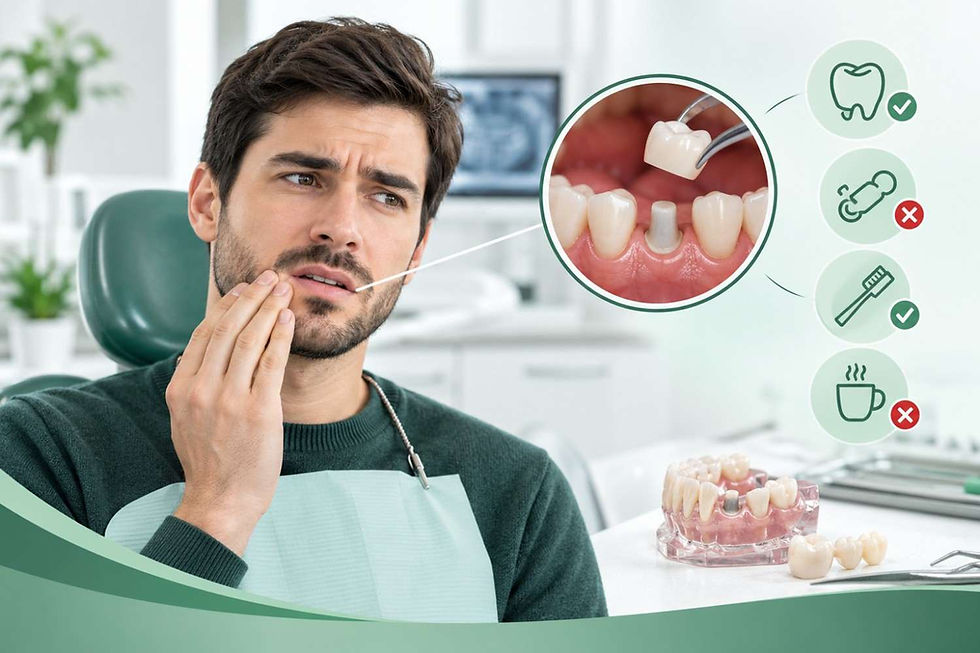
Your temporary crown fell off (or fell out mid-meal). Maybe it came away in a piece of toffee, or you found it rattling around after brushing. First thing: don't panic. A temporary crown is designed to come off fairly easily, so this happens more often than you'd think, and in most cases it's a quick fix.
What matters is what you do in the next day or two. Here's exactly how we'd handle it at Appin Dental Surgery.
What Should You Do If Your Temporary Crown Fell Off?
If your temporary crown falls out, keep it, clean it, and call your dentist within 24 hours so it can be re-cemented. The tooth underneath is shaped, sensitive and unprotected, so the goal is to get it covered again quickly.
Step by step:
Find the crown and keep it. Rinse it under cool water and store it in a small container or zip-lock bag. Don't throw it out, even if it looks damaged.
Check the tooth. Look for sharp edges or a broken piece of tooth. If the tooth itself has cracked, tell us when you call.
Call your dentist. At our Appin clinic, we keep same-day slots for problems like this. Most re-cements take about 15 minutes.
Protect the tooth until then. Chew on the other side, skip very hot or very cold drinks, and brush the area gently.
Consider a pharmacy temporary dental cement if you can't get in the same day (more on this below).
We see this most often with the first sticky meal after the appointment. Chewing gum, caramels and Minties are the usual suspects.
Can You Put a Temporary Crown Back On Yourself?
Yes, as a short-term fix you can put a temporary crown back on with temporary dental cement from a pharmacy. It isn't a replacement for a proper re-cement, but it'll protect the tooth for a day or two.
If you try it:
Clean the inside of the crown so there's no old cement or food left in it.
Test the fit first with no cement. It should sit fully down and your bite should feel normal.
Add a small amount of temporary crown cement to the inside, press it into place, and bite gently on a clean cloth.
Wipe away any extra cement from around the gum.
Do not use superglue or household glue. We've had to remove glued-on temporaries, and it can damage the tooth, irritate the gum and make your final crown harder to fit.
And if the crown won't sit down properly, leave it out. Forcing it on can cause more trouble than a bare tooth for a day.
What Is a Temporary Crown, and Why Do You Need One?
A temporary crown is a short-term cap placed over a prepared tooth while your final crown is being made in a dental lab. It's usually made from acrylic or bis-acrylic resin and held on with a weaker cement, so your dentist can remove it easily at the fitting appointment.
So the fact that it came off isn't a sign anything went wrong. That weaker hold is deliberate.
A dental temporary crown does a few jobs at once:
Protects the tooth. Preparing a tooth for a crown removes some of the outer enamel, which leaves it sensitive.
Holds the space. Teeth shift surprisingly fast. Without cover, neighbouring and opposite teeth can drift in a matter of days.
Keeps the gum in shape. Gum tissue can start to grow over the edge of a prepared tooth.
Lets you eat, speak and smile normally while you wait.
What's the difference between a temporary crown and the final crown? Strength and fit. A temporary is a stopgap, while a lab-made crown is designed to last many years with good care.
How Long Can a Temporary Crown Last?
Most temporary crowns are worn for about 2 to 3 weeks, which is how long a dental lab usually needs to make the final crown. They're not built to go much longer than that.
There are exceptions. A dental implant temporary crown may stay on for several months while the gum and bone heal around the implant. We cover more on that in our information on dental implants at Appin Dental Surgery.
Here's why we don't like patients waiting a week to replace a lost temporary. If a prepared tooth sits uncovered for too long, the teeth around it can move just enough that the final crown no longer seats properly. That can mean new impressions and a remake. A quick re-cement avoids all of that.
It matters even more after a root canal. Healthdirect notes that delaying the final crown after root canal treatment raises the chance of the tooth breaking. If your tooth has had root canal treatment, our guide on what to expect after a root canal is worth a read too.
Is Pain Under a Temporary Crown Normal?
Mild sensitivity after a temporary crown is common for the first few days. A temporary crown sensitive to cold, or a temporary crown sensitive to pressure when you bite, usually settles within a week as the tooth calms down.
Pain that gets worse instead of better is different. Look out for:
Pain when biting that doesn't ease. Often the temporary sits a little high. It's a quick adjustment.
Throbbing toothache after a temporary crown, especially tooth pain at night that keeps you awake. This can mean the nerve is inflamed.
Swelling, a bad taste or a pimple on the gum. These can be signs of infection.
Sharp pain with cold that lingers for more than 30 seconds after the cold is gone.
Every case is a bit different. In our experience, most temporary crown pain turns out to be a high bite or normal short-term sensitivity. But a small number of teeth that needed crowns were already under strain, and lingering pain can be the first sign a tooth needs root canal treatment.
If your teeth were sensitive before the crown, our article on why teeth become sensitive explains the common causes.
How Do You Look After a Temporary Crown?
How you care for a temporary crown mostly comes down to avoiding sticky and hard foods, chewing on the other side, and changing how you floss. A few small habits will usually keep it in place until your fitting.
Floss, but slide it out. Ease the floss down between the teeth, then pull it out sideways instead of lifting it back up. Lifting can pop the crown off.
Skip sticky and chewy foods. Gum, caramels, lollies, crusty bread and beef jerky can all pull a temporary loose.
Avoid hard foods on that side. Ice, nuts and hard lollies can crack the resin.
Brush normally, just gently around the gum line.
Grinding teeth with a temporary crown is a common reason they break or come loose. We see this a lot in patients who clench at night without realising. If that sounds like you, mention it at your appointment. Our post on how grinding makes teeth hurt covers the signs, and a custom occlusal splint can protect your final crown down the track.
When Is a Lost Temporary Crown Urgent?
A lost temporary crown is rarely a true emergency, but you should see your dentist within 1 to 2 days. It becomes urgent if you're in significant pain, the tooth has broken, your face is swelling, or you think you've inhaled the crown.
What about swallowing it? If you swallowed your temporary crown and feel fine, it'll usually pass on its own. Still, let us know. If you're coughing, wheezing or struggling to breathe, it may have gone into your airway.
Getting Your Crown Sorted at Appin Dental Surgery
If you've lost a temporary crown, it's usually a short visit to fix. We regularly see patients from Appin, Wilton, Picton and the new estates around Bingara Gorge for re-cements and crown fittings.
Appin Dental Surgery carries on a 30+ year legacy of caring for Macarthur families through our sister practice, Bradbury Dental Surgery. Dr Shelly has cared for patients across Queensland and NSW for over 19 years, and as a QIP-accredited practice, we use TGA-approved materials and follow NHMRC infection control standards.
If you're getting ready for a crown or want to understand your options, you can read about our dental crown treatment at Appin Dental Surgery. If your temporary crown fell off and the tooth is sore or broken, book in through our same-day emergency dental care. Families from Wilton and Picton are only a short drive away.
Call us on (02) 9068 1369 or book online through HealthEngine.
Frequently Asked Questions
Why does my temporary crown keep falling off?
A temporary crown that keeps falling off usually isn't fitting snugly, has broken, or is being loosened by sticky food or grinding. Short or heavily worn teeth can also give the cement less to grip. Your dentist can remake or reline the temporary so it holds better.
Can I leave my tooth without a temporary crown for a few days?
It's best not to. An uncovered prepared tooth can become sensitive, and neighbouring teeth can shift enough that the final crown no longer fits. Aim to have it re-cemented within 1 to 2 days.
Can I eat normally with a temporary crown?
You can eat most foods, but chew on the other side where possible. Avoid sticky, chewy and very hard foods like gum, caramels, nuts and ice until your final crown is fitted.
My temporary crown fell out and I can't find it. What now?
Call your dentist and let them know. A new temporary crown can usually be made in the chair in one short visit, so there's no need to wait for the original.
Does it hurt to have a temporary crown put back on?
Most people find re-cementing a temporary crown quick and comfortable. If the tooth is very sensitive, your dentist can numb the area first.


Comments